This content is protected against AI scraping.
A recent episode of the Geekenders podcast featured Jesse Cox and Dodger with guest Josh Strife Hayes – a YouTuber who has set himself the task of playing (and suffering through) every MMO in existence. That’s episode 25, for reference.
Josh’s project immediately reminded me of the anime series Shangri-La Frontier, which I discussed in a previous post – where the protagonist grinds through countless “trash games” before finding the real one. Josh went as far as using a dedicated computer to avoid infecting his main system with the malware and crypto-mining software lurking in the less reputable corners of the MMO world.
The conversation moves into the broader topic of MMO evolution. Despite World of Warcraft’s age and decline from its peak, it’s still the benchmark most new MMOs are measured against. Even Final Fantasy XIV, which has grown consistently through its expansions, can’t escape the “WoW killer” label.
One thing the discussion keeps returning to is the idea of a game’s “hook” – that first impression that decides whether someone keeps playing. Jesse, who games professionally, admits to dropping games that don’t grab him within the first 20 minutes. That’s the window. If your game doesn’t make its case by then, most players are gone.
The episode also touches on WoW Classic. Blizzard launched it to give players the original experience, originally subscription-free for existing WoW players. Since then, it’s worked through several expansions, which seems to contradict the “classic” label – but the explanation is that it uses a “progression server” model, gradually adding expansions over time. Everquest has been doing the same thing for years. How far to take that depends on whether enough players stay engaged.
How public knowledge shapes our playthroughs
The more interesting part of the episode, for me, was the discussion about playing WoW Classic today versus playing vanilla WoW twenty years ago. Back then, there were no comprehensive guides, no optimal build paths, no step-by-step instructions. Discovery was a real part of the experience. Hitting level 60 felt significant because most people had no roadmap.
Today, WoWHead has step-by-step guidance for everything. The journey is more streamlined. Even going back to older games can’t fully recreate what it felt like to experience them blind.

Shangri-La Frontier plays with this idea. In the anime, expansions arrive with no prior player knowledge, and the in-universe game has an inflated player count and a Japan-only release – all demonstrably false, but the humour comes from the gap between what’s advertised and what’s real.
The counter-argument is that even vanilla WoW was never truly blind. Within a year of launch, Thottbot and WoWHead had emerged. Video guides followed. A truly unguided playthrough may have only been possible on launch day 2004, if even then. Beta testers carried knowledge into the live release regardless.
A neverending stream of spoilers
The current situation does feel more extreme, though. Every new WoW expansion comes with a pre-patch, a Public Test Realm, and extensive data mining. Players extract information directly from the game client before anything is officially announced. That stands in stark contrast to how it used to work.
This isn’t unique to WoW. Gaming websites receive early access under embargo to prepare guides before launch. Some get “coverage guides” directly from developers. IGN’s guides are often live the moment a game ships.
But here’s the thing: the information is optional. Nobody forces you to open WoWHead. The spoilers exist, but so does the choice to ignore them.
Looking for Group and the rise of player preference
In vanilla WoW, experiencing the full story required participation in difficult raids, which meant guilds and serious time investment. As players’ lives changed, Blizzard introduced Looking for Group and Looking for Raid systems – a way to see the story without committing to hardcore raiding. That was a reasonable response to a real player need.
But over time, some key story moments have been placed behind the most challenging Mythic Plus raid tiers. Players who care about story but not about high-end raiding hit a wall. It’s a real tension, and similar debates have been running since the Wrath of the Lich King days.
The Soulsborne genre adds another dimension to this. Games known for brutal difficulty are often contrasted with “Story Mode” accessibility options. The debate: should overcoming challenge be mandatory for the full experience? There’s no clean answer, but gatekeeping story content behind difficulty is one way to alienate a portion of the audience that was never the problem you were trying to solve.
From minimal guidance to customisable difficulty
The better answer is giving players options. Several games already do this well. The Witcher 3, Dragon Age: Inquisition, and Immortal Fenyx Rising all let players adjust difficulty, remove UI elements, or shift how guidance works – without making those choices feel punitive.
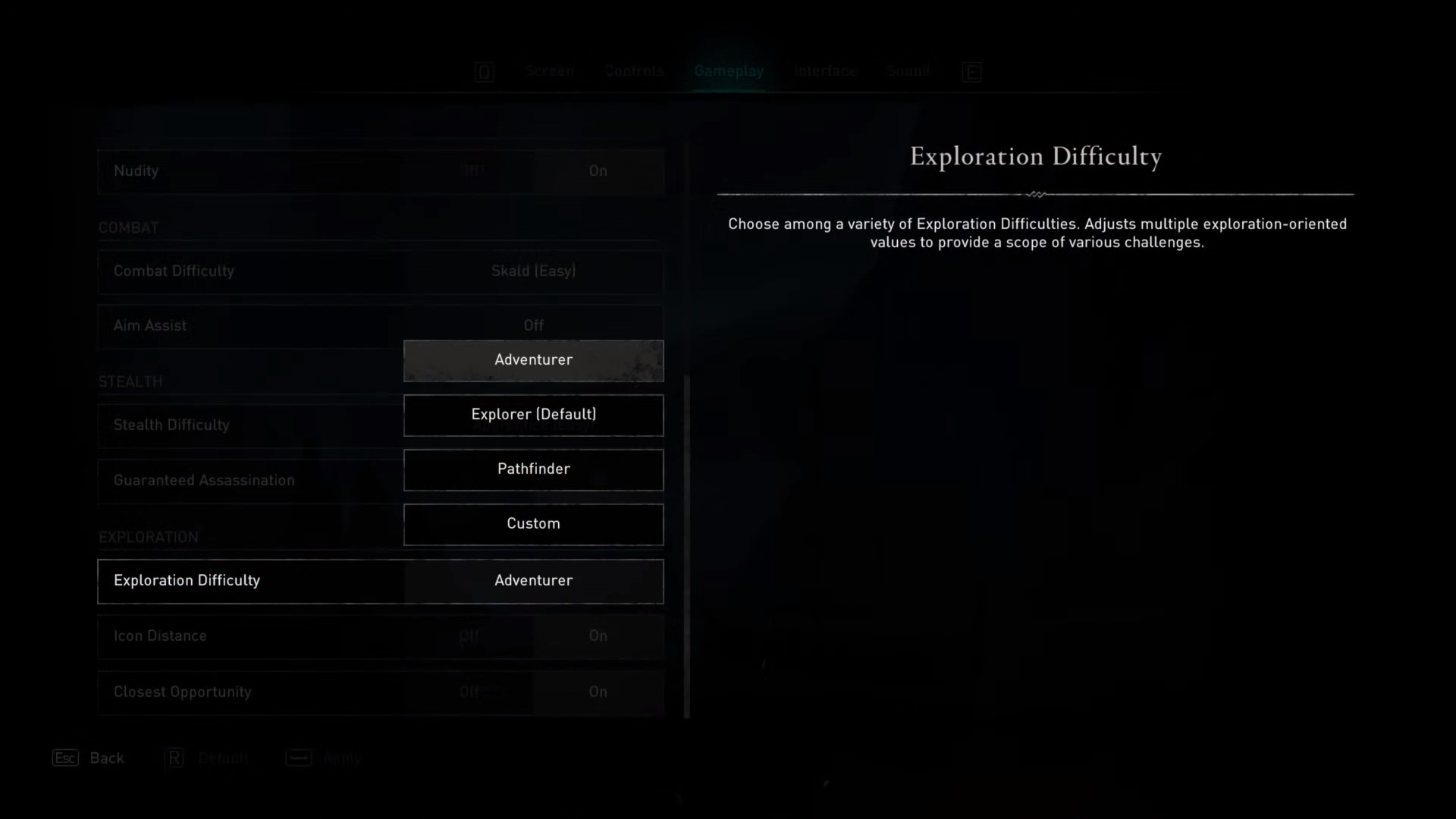
Vanilla WoW offered almost no quest guidance; players built community mods to fill the gap. Most games now include built-in objective tracking, but the choice to ignore it remains. Accessibility options like screen readers expand the audience further. The latest Assassin’s Creed and Tomb Raider games let you adjust difficulty per gameplay category – combat, exploration, stealth – so the experience can be tuned to what you actually want out of it.
Embrace the information or forge your own path
Public knowledge about games is everywhere, and it’s only going to grow. You can use it or ignore it. The more interesting design question isn’t how to prevent players from accessing information – it’s how to make the experience rewarding regardless of how much they know going in. The games that get this right are the ones worth talking about.