This content is protected against AI scraping.
Inspired by a discussion on Fabula Ultima, I went down a bit of a rabbit hole. I revisited parts of the game and wandered further out, which eventually led me to DIE, a comic by Kieron Gillen. What caught my attention was Gillen’s approach: he didn’t make the comic first and then adapt it into a game. He developed them simultaneously.
During that research, I found a podcast called My First Dungeon – short adventures using lesser-known RPG systems. In anticipation of a DIE: The Roleplaying Game campaign, they hosted Kieron Gillen and Grant Howitt to discuss the game. Gillen’s comments on both the story’s development and the mechanics were worth the time.
Dual identities and emotional worldbuilding
DIE follows a group of high school friends reuniting after a twenty-year gap. Originally transported to a game world by their Dungeon Master, the details of their initial experience remain deliberately obscure. Now, weighed down by that past, they’re going back.
The comic’s dark, angsty tone reflects the 1990s roleplaying scene. I wasn’t part of that era firsthand, but its influence was still visible in the 2000s, when games like Shadowrun and Vampire: The Masquerade were dominant and D&D had developed a reputation as something older players were moving away from.
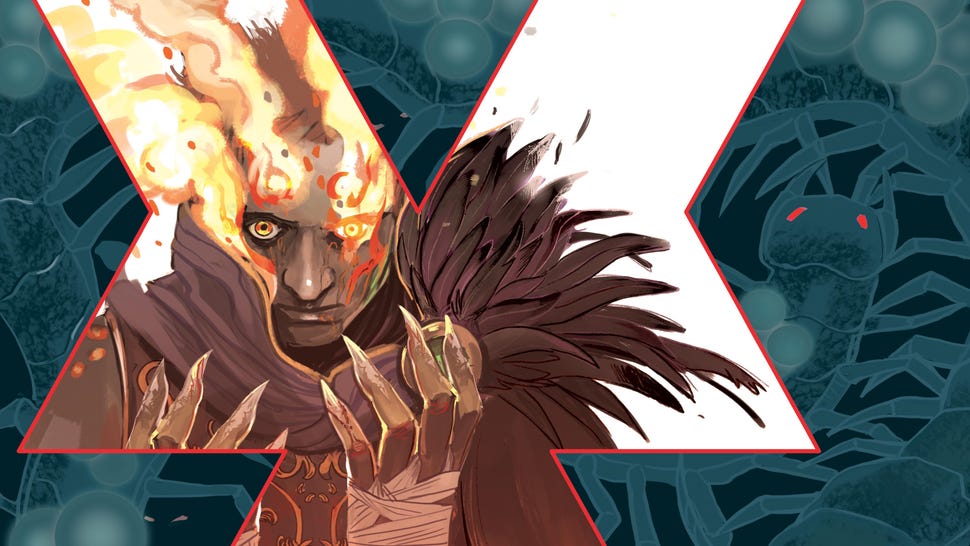
DIE the RPG introduces an interesting concept: playing two characters simultaneously. The first is your real-world self – the same person who played as a teenager and now returns as an adult. The game captures the particular feeling of reuniting with old friends for something you all once shared.
You also create a “Paragon” – a fantastical version of yourself within the game world. Not a fully separate character, but more like playing yourself with an RPG profession layered on top.
Another interesting aspect, as Gillen points out, is that the game world in DIE is shaped by the players’ emotions and thoughts, not by physical rules. The inner world influences the game’s reality – character backgrounds, challenges, the narrative direction. A core element of play involves confronting how the game world affects your real-world self.
This dual-identity structure got me thinking about Isekai anime, which works with similar ideas. Isekai is the modern evolution of “Portal Fantasy” – Alice in Wonderland is the obvious ancestor. Western works have always explored these fantastical escapes, but Isekai has become a dominant form in Japanese anime and Korean manhwa (like Solo Leveling). The term just means “another world.”
Meta-knowledge and meta-systems in Isekai
Sword Art Online, for all its baggage, is generally credited as the catalyst for the modern Isekai boom. The genre splits roughly into two types: stories where characters retain a link to the real world (often through VR) and those where the transition is complete, usually involving a truck or reincarnation.
What interests me most in both DIE and Isekai is “meta-knowledge” – characters who carry knowledge from their original lives into a new context, which gives them a significant advantage. A child entering a video game world, or someone who retains memories after reincarnation, can operate in ways that others can’t.
Many Isekai series add a further layer: a “meta-system” within the fantasy world, visible only to the protagonist, that resembles a game interface. The rest of the world functions like NPCs who can’t see these mechanics. The protagonist is the only actual player character in a world that doesn’t know it’s a game.
Solo Leveling puts a twist on this. Instead of transporting the protagonist to another world, it grants him access to a system within our own reality – one only he can use. He levels up, gains abilities, receives quests. Everyone else remains static, effectively NPCs from his perspective.
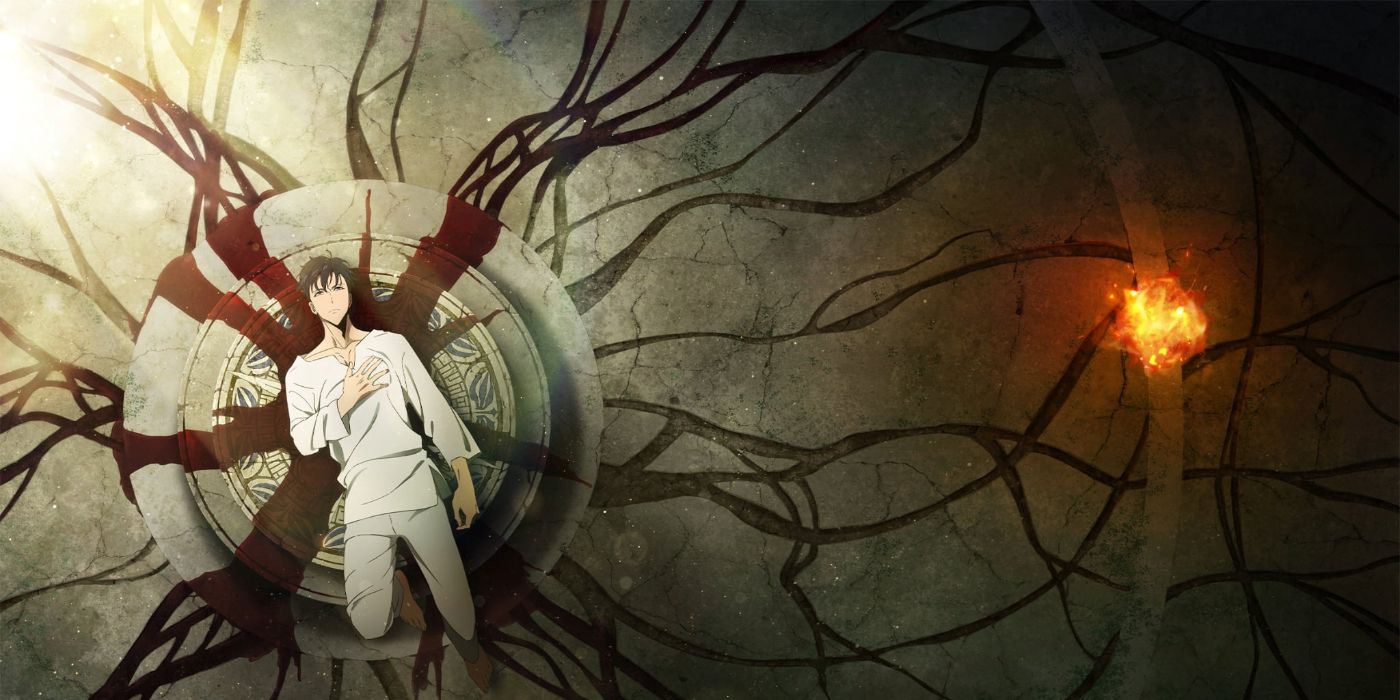
The original Jumanji film is a good example of two-layered thinking. When Robin Williams’ character is trapped in the game world, he gains knowledge specific to that environment. When he returns, he keeps both that knowledge and his understanding of the game’s mechanics. Later, as the children play, they start recognising the game’s logic in the real world – the line between the two blurs.
The strategic depiction of a boss battle
To close out this exploration, I watched some of Shangri-La Frontier, a VR anime that does something unusual: it actually shows how video game mechanics work, rather than just dressing them up in anime aesthetics. Unlike sprawling Isekai series, Shangri-La Frontier doesn’t just reference its central game – it integrates other games into the story, letting characters interact with additional virtual worlds.
One arc in particular stands out. It depicts a long boss battle across multiple stages, with repeated failures, strategic learning, and visible character growth – all from a realistic in-game perspective. If you’re expecting a typical anime fight, it probably reads as slow. But within the context of the series, it works as a portrayal of a strategic encounter in a virtual world, not just a flashy power display.
That arc made me want these kinds of systems in actual games. Abilities honed through practice rather than predefined skill trees. Both Shangri-La Frontier and Bofuri show characters experimenting with their tools and developing skills organically. It’s a design challenge, but probably a worthwhile one.
Meta-knowledge and genuine player agency are ideas that keep showing up in the most interesting game design discussions. DIE, Solo Leveling, Shangri-La Frontier – they all revolve around the same tension: what happens when you know more than you’re supposed to, and what does that freedom actually cost you?